
Fast, Reliable Roof Replacement & Installation Across Chicago Loop
A full roof replacement on a Chicago Loop high-rise typically runs $18,000-$75,000 for flat membrane systems, with most commercial projects completed in 2-5 business days depending on building access and membrane type. Our Roof Replacement & Installation team has worked Loop rooftops since 2016, from the terra cotta parapets of LaSalle Street to the concrete towers along Wacker Drive. We answer live, 24 hours a day, at (855) 641-3418. If you’re seeing ponding water, lifted membrane edges, or leaks after easterly wind events, we’ll get a uniformed technician up there with a camera, not a sales pitch.
Chicago Loop is not a shingle town. The building stock here - steel-frame masonry high-rises from the 1890s through 1970s concrete towers - demands roofers who understand flat and low-slope membrane systems, ornate parapet walls, and the specific havoc Lake Michigan’s unobstructed winds wreak on rooftops forty stories up. We’ve trained our crews on exactly these conditions. They know the difference between a standard TPO install and one that’ll hold when January gusts hit 50 mph off the lake.
Why Ridgeline Roofing Co. of Chicago Is Chicago Loop’s Preferred Roof Replacement & Installation Company
We’ve been on Chicago roofs since 2016 - over 42 years - and the Loop has been part of our territory from the start. Pete Callahan built this company on the idea that a roofer should still be around to answer for the job, not packed up and gone after the check clears. That’s why we hire local crews, train apprentices into journeymen, and keep our phones staffed by live people around the clock. No voicemail trees. No “we’ll call you back Tuesday.” A real person, every time.
Our 90-Day Done Right Promise is written, not whispered. If something isn’t right, we come back and make it right - no paperwork avalanche, no arguing about whose fault it was. The number on your estimate is the number on your invoice. We’ve learned that Chicago Loop property managers and building engineers have long memories, and they’ve seen enough fly-by-night operators to know the difference.
Response time to the Loop is typically same-day for emergencies. Our trucks stage from locations that let us reach the central business district quickly, and our technicians arrive background-checked, in uniform, with photo-documented inspections - actual pictures from your actual roof, not a generic damage report pulled from a template.
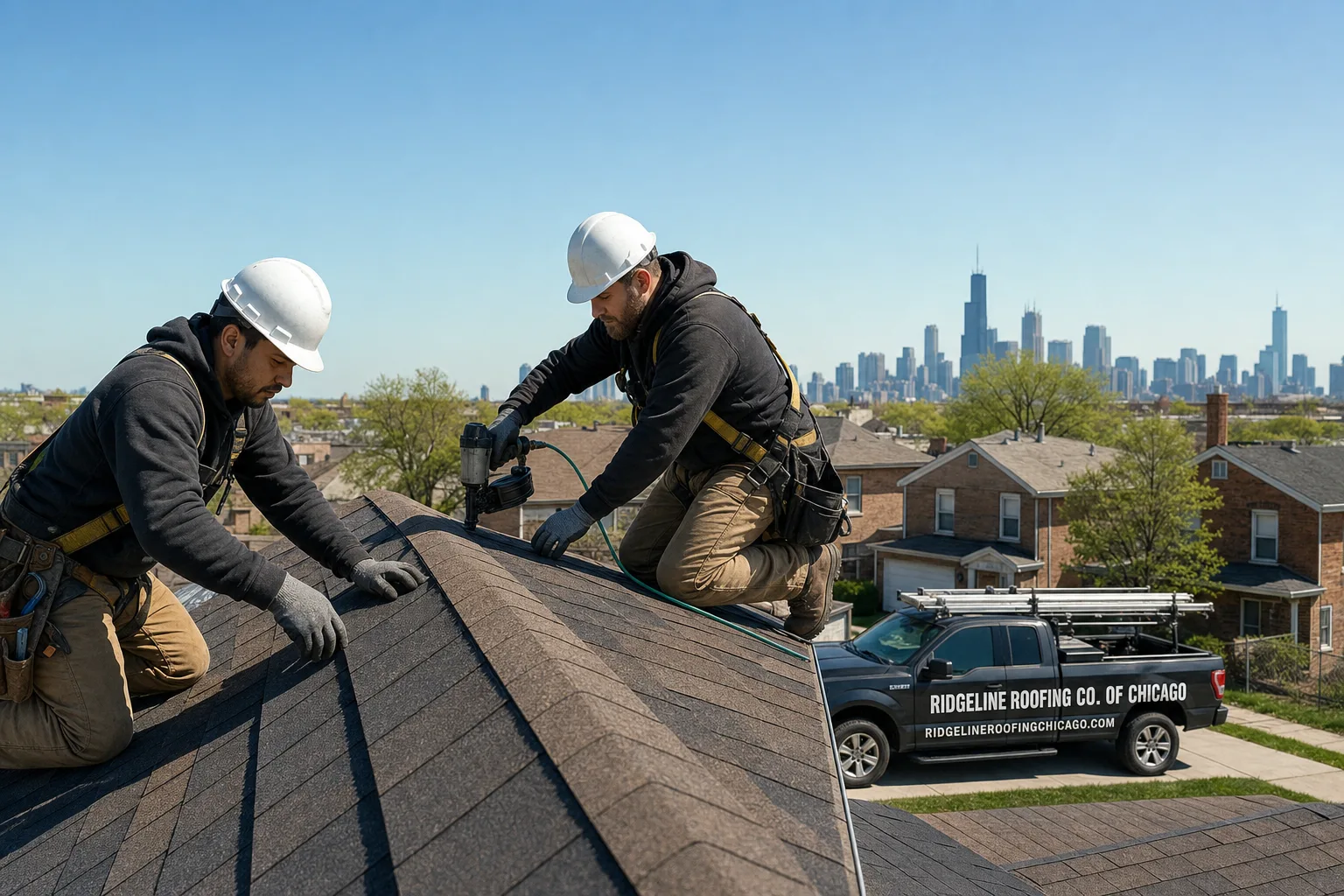
We replaced a failing 1920s built-up roof on a LaSalle Street high-rise, where lake-driven winds had lifted the original gravel surface and exposed the membrane to repeated freeze-thaw cycles. Our crew installed a fully-adhered modified bitumen system with heavy-duty coping over the ornate parapet, securing the edges with wind-rated fasteners to withstand Chicago’s gusty conditions. That roof is still holding.
Our Roof Replacement & Installation Services in Chicago Loop
Flat Roofing
Flat roofing is the backbone of our Chicago Loop work. Nearly every building here - from the terra cotta-clad steel frames of the 1920s to the concrete towers of the 1960s - sits under a low-slope or dead-flat roof. We install and replace TPO, EPDM, modified bitumen, and built-up systems, with particular attention to edge fastening and parapet detailing that other crews overlook. Chicago Loop’s unobstructed Lake Michigan easterly winds cause wind uplift that peels inadequately fastened TPO and EPDM edges - a failure mode far more common here than in other Midwest cities. We use wind-rated fastening patterns and fully-adhered membranes where the structure allows, because a loose edge forty stories up doesn’t just leak; it becomes a sail.
Full Roof Replacement
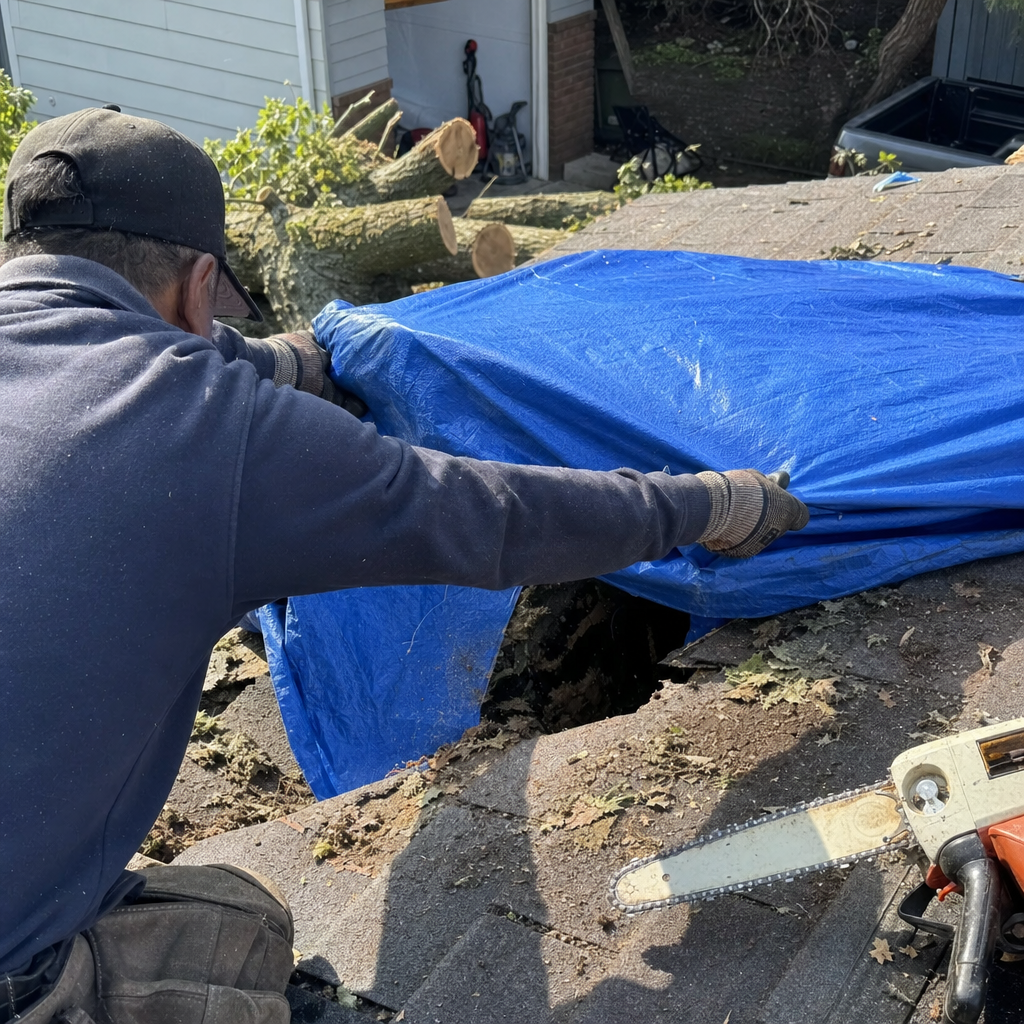
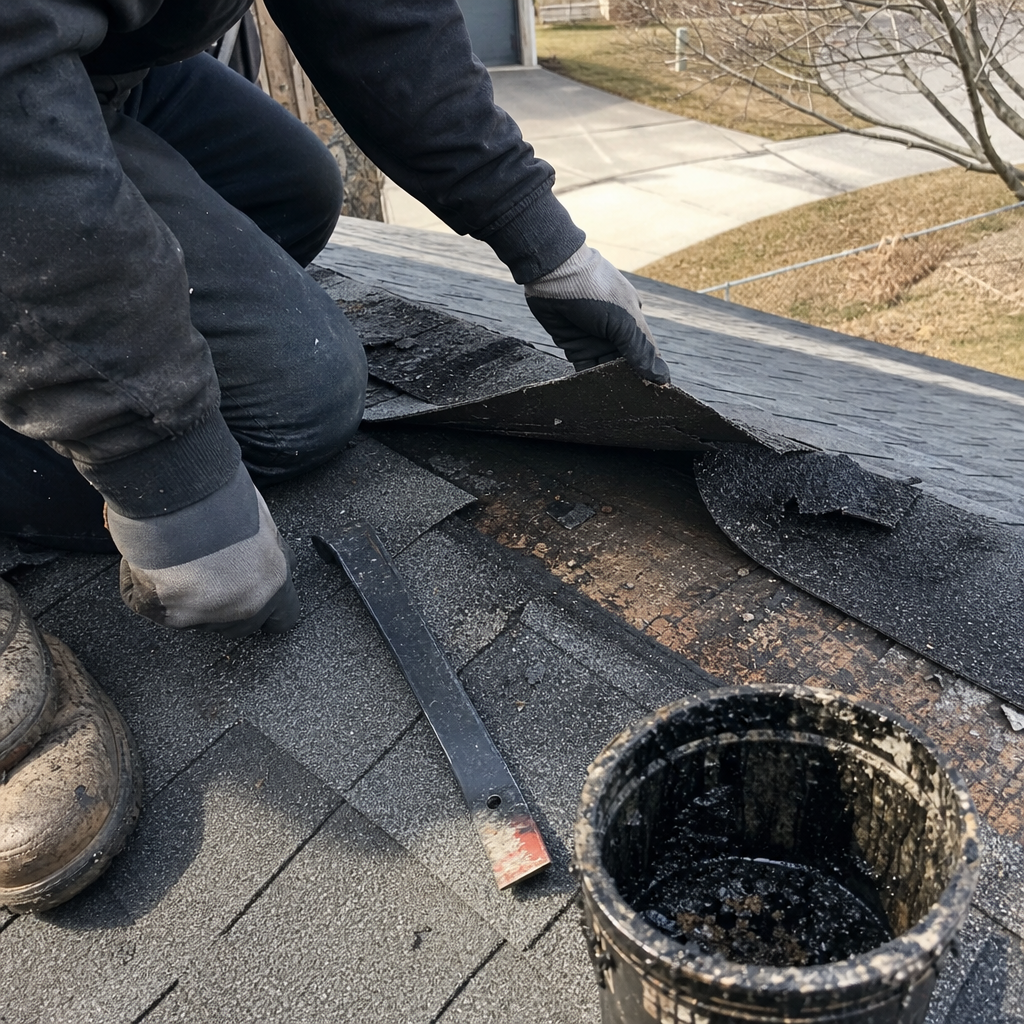
When a Loop roof has reached the end of its service life - typically 15-25 years for single-ply membranes, shorter if drainage has been poor - we handle complete tear-off and replacement. This gets complicated fast in Chicago Loop. Many buildings carry original built-up asphalt and gravel from the 1950s or earlier, often with multiple overlays that hide saturated insulation. Our inspections map the full assembly before we quote, so you’re not hit with change orders once we open it up. We work around rooftop mechanical equipment, coordinate with building engineers for crane access on tight streets, and schedule around the Loop’s heavy pedestrian and traffic patterns. The 60695 ZIP and surrounding blocks have specific loading and staging restrictions we navigate regularly.
Metal Roofing
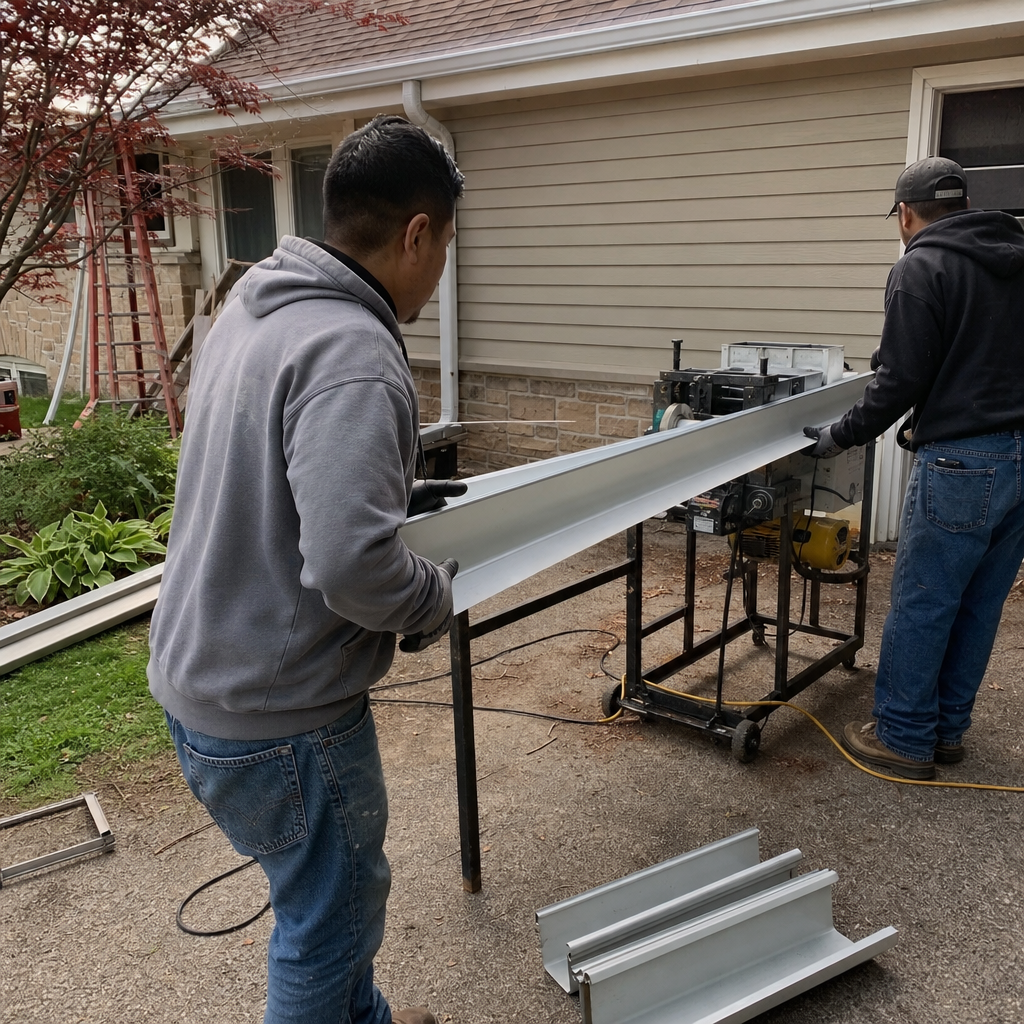
Metal roofing in Chicago Loop typically means standing-seam or flat-lock copper and aluminum on parapet coping, cornice lines, and ornamental details - not the agricultural panels you see on barns. We fabricate and install lead-coated copper, zinc, and painted steel coping and counterflashing for masonry parapets that can’t be properly sealed any other way. These metal systems expand and contract dramatically through Chicago’s 38-42 annual freeze-thaw cycles, so we engineer slip joints and fastening patterns that accommodate movement without opening seams. On historic buildings, we match existing profiles and patinas so the repair doesn’t shout.
New Construction
New construction roofing in Chicago Loop is rare compared to replacement, but when it happens - typically on infill projects or major renovations - we coordinate closely with architects and general contractors from design through final inspection. We specify membrane systems appropriate to the building’s wind exposure, drainage strategy, and any planned green roof or cool-roof overlay. Chicago pioneered municipal green roof incentives in the early 2000s, and the Loop has a higher density of green and cool-roof installations than almost any other US central business district. We regularly work around established growing media, drainage mats, and rooftop gardens that complicate tear-offs and re-roofing in ways that would be rare in a neighboring suburb or even other Chicago neighborhoods.
What happens when you call
- 1
A real person answersNo phone trees - you reach a local pro.
- 2
You get an upfront price rangeHonest numbers before anyone is dispatched.
- 3
A background-checked tech heads outLicensed & insured, dispatched right away.
- 4
You approve before work beginsNothing starts until you say go.
Trusted Brands We Service in Chicago Loop
We are authorized installers for seven manufacturer lines: GAF, CertainTeed, Owens Corning, IKO, Atlas, Tamko, and Boral. For Chicago Loop’s flat roof market, we most often specify GAF and CertainTeed membrane systems with wind-uplift ratings tested for central business district conditions. We stock common membrane widths, adhesives, and flashing components locally, which means faster turnaround when a Loop building engineer needs a section repaired before the next weather system moves in. We don’t substitute materials without written approval. What we specify is what goes on your roof.
Common Roof Replacement & Installation Problems We See in Chicago Loop Homes
- Wind uplift peeling membrane edges. Chicago Loop’s rooftops face unobstructed Lake Michigan easterly winds, and inadequately fastened TPO or EPDM edges lift, bubble, and eventually tear. We see this on buildings where the original installer used standard inland fastening patterns that don’t account for gust exposure at height.
- Freeze-thaw splitting seams and flashings. Chicago’s roughly 38-42 freeze-thaw cycles annually mean any ponding water on flat roofs repeatedly expands and contracts, splitting seams and heaving flashings faster than in drier inland cities. Poor drainage design accelerates the damage.
- Moisture intrusion at parapet flashing. Horizontal rain driven by lake winds penetrates terra cotta or masonry joints, then migrates behind coping and into the wall assembly. The Loop’s ornate masonry parapets require specialized lead or metal coping and counterflashing work that is largely absent from residential or suburban commercial roofing.
- Green roof complications during replacement. Established growing media, drainage mats, and root barriers add weight, access difficulty, and disposal cost to tear-offs. We’ve developed protocols for protecting viable plantings and working around irrigation systems that would be irrelevant in most markets.
Pricing for Roof Replacement & Installation in Chicago Loop, IL
Roof replacement in Chicago Loop carries premium pricing compared to residential markets, driven by high-rise access costs, downtown staging restrictions, and the specialized membrane and metal work these buildings require.
| Service | Typical Range in Chicago Loop |
|---|---|
| Flat membrane repair (localized) | $2,500 - $8,000 |
| Partial flat roof replacement (membrane + insulation) | $12,000 - $35,000 |
| Full flat roof replacement, mid-rise building | $18,000 - $55,000 |
| Full flat roof replacement, high-rise with crane access | $45,000 - $75,000+ |
| Parapet coping and counterflashing replacement | $8,000 - $22,000 |
| Metal roofing (ornamental copper/aluminum details) | $15,000 - $40,000 |
Factors that move the needle: building height and crane requirements, existing membrane layers that must be removed, condition of underlying insulation, parapet complexity, and whether we’re working around active green roof systems. We provide no-hassle upfront pricing - the number on the estimate is the number on the invoice. Call (855) 641-3418 for a free, specific quote on your building.
We Also Serve Cities Near Chicago Loop
Our crews work throughout downtown Chicago and the immediate surrounding neighborhoods. We regularly handle Roof Replacement & Installation in Chicago Loop and nearby areas including Near South Side, Near North Side, Chicago proper, and West Town. Building conditions vary by neighborhood - the residential stock in West Town faces different challenges than the commercial high-rises of the Loop - and we adjust our approach accordingly.
Serving Chicago Loop, IL - Our Local Coverage Area
We’re based in the Chicago Loop area and know this community well. Use the map below to see our service coverage - if you’re nearby, we can almost certainly help.
FAQs - Roof Replacement & Installation in Chicago Loop
Chicago Loop’s flat roofs fail from wind more frequently because the district sits immediately west of Lake Michigan with no windbreak, exposing rooftops to unobstructed easterly gusts that peel inadequately fastened membrane edges. Most Midwest cities have mixed building heights or terrain that disrupts wind flow; the Loop’s canyon-like streets and open lakefront actually accelerate gusts at roof level. We specify wind-rated fastening patterns and fully-adhered systems specifically for this exposure. Call (855) 641-3418 if you’re seeing lifted edges - estimates are free.
Yes, roof replacement on Chicago Loop high-rises requires permits through the City of Chicago Department of Buildings, with additional review for buildings in landmark districts or with planned changes to drainage or structural loading. We handle permit submission and inspection scheduling as part of our project management - most Loop building engineers appreciate not having to navigate that bureaucracy themselves. Call (855) 641-3418 and we’ll walk through the specific requirements for your address.
Fully-adhered modified bitumen and properly fastened TPO with reinforced seams outperform mechanically-attached systems in Chicago Loop’s freeze-thaw conditions, which see roughly 38-42 cycles annually. The key is eliminating ponding water through proper slope and drainage design - no membrane survives repeated ice expansion in standing water. We inspect drainage as thoroughly as we inspect membrane condition. Call (855) 641-3418 for a photo-documented assessment of your roof’s specific vulnerabilities.
Green roofs add 20-40% to replacement costs in Chicago Loop due to the weight of growing media, the need to protect or replace drainage mats and root barriers, and the limited disposal options for saturated soil. Chicago pioneered municipal green roof incentives in the early 2000s, and the Loop’s density of these installations means we regularly work around established plantings and irrigation systems that complicate tear-offs. We develop site-specific protocols for each green roof project. Call (855) 641-3418 for an estimate that accounts for your rooftop garden’s specific conditions.
Yes, cool roofs can be installed on historic Chicago Loop skyscrapers, typically using white or light-colored TPO or reflective coatings over existing membranes, provided the building’s structural capacity and landmark status allow the modification. The City of Chicago’s green roof program and energy codes encourage cool-roof reflectivity, though landmark review may restrict visible changes to parapet or cornice lines. We’ve navigated this process on multiple Loop buildings and coordinate with preservation staff as needed. Call (855) 641-3418 to discuss whether a cool roof fits your building’s constraints.
We’re here when you need us - live person, any hour. Call Ridgeline Roofing Co. of Chicago at (855) 641-3418 for a free estimate on roof replacement or installation in Chicago Loop. We’ll get a technician up on your roof with a camera, show you exactly what we’re seeing, and give you a number that won’t change once work begins. Done right - and if it’s not, we make it right.
Written by Pete Callahan, Owner at Ridgeline Roofing Co., serving Chicago since 2016.