
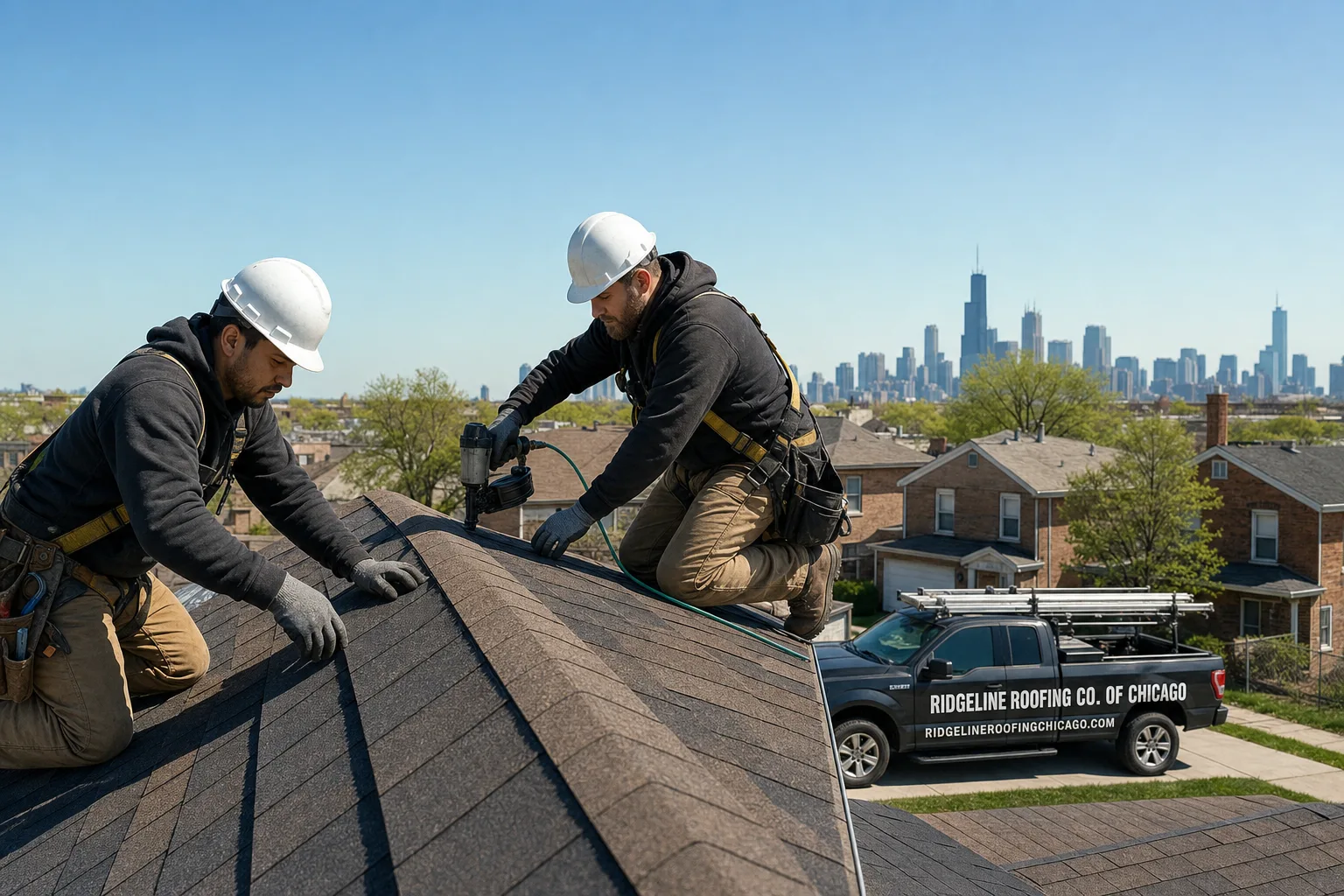
Fast, Reliable Emergency & Storm Damage Across Chicago Heights
When a storm tears through Chicago Heights, you need a roofer who knows what hides beneath your shingles. We’re Ridgeline Roofing Co., and we’ve been answering emergency calls in Chicago Heights since 2016. A live person picks up our phones 24 hours a day, including nights, weekends, and the middle of a storm. Most of our Chicago Heights customers see our uniformed technicians within hours, not days. We understand the older housing stock here, the layered roofs on those 1910s-1940s brick bungalows and two-flats, and the specific damage patterns that Lake Michigan’s southwestern winds drive across this flat inland terrain. Call (855) 641-3418 now for emergency response.
Why Ridgeline Roofing Co. of Chicago Is Chicago Heights’s Preferred Emergency & Storm Damage Company
We’ve spent over 42 years building a reputation in south suburban Cook County, and Chicago Heights has been part of our service territory from the start. Our crews know the difference between a home on Emerald Avenue built in 1923 and a postwar ranch near the Sauk Village line, and we price accordingly.
Chicago Heights homeowners have left us strong reviews specifically citing our response after storms, our photo-documented inspections, and our willingness to explain what their insurance adjuster needs to see. We’re not storm chasers with out-of-state plates. We’re local. We hire local crews, train apprentices into journeymen, and plan to be here in thirty years.
Our response time to Chicago Heights is typically under two hours for active leaks and wind damage. We carry emergency tarps, plywood, and temporary sealants on every truck, and our technicians are background-checked and uniformed, the same standard we’d hold for work done in our own mother’s home.
We also know the local permitting landscape. Chicago Heights falls under Cook County jurisdiction for many building matters, and we’ve worked with village inspectors on Halsted Street commercial flat roofs and residential re-roofs alike. That familiarity saves time when you’re trying to stop water from pouring through your ceiling.
Our Emergency & Storm Damage Services in Chicago Heights
Storm Damage Repair
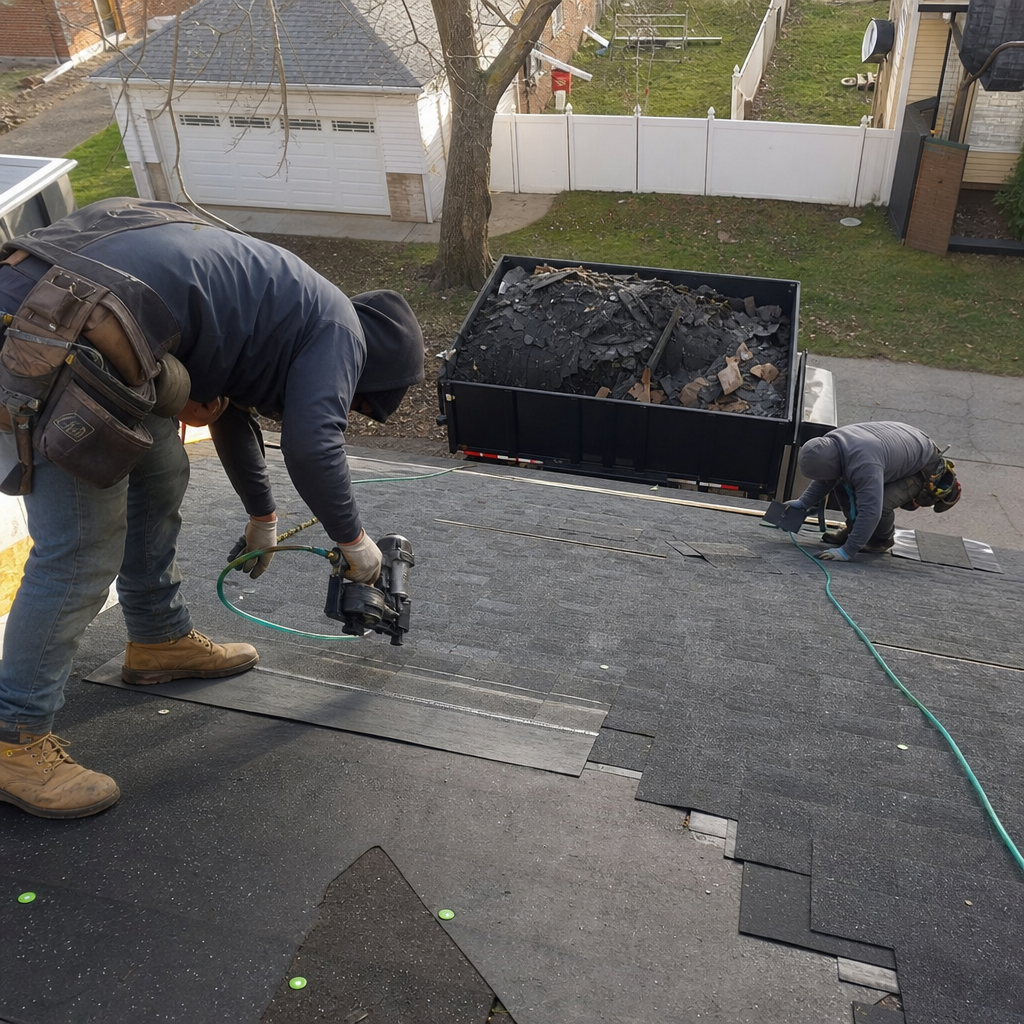
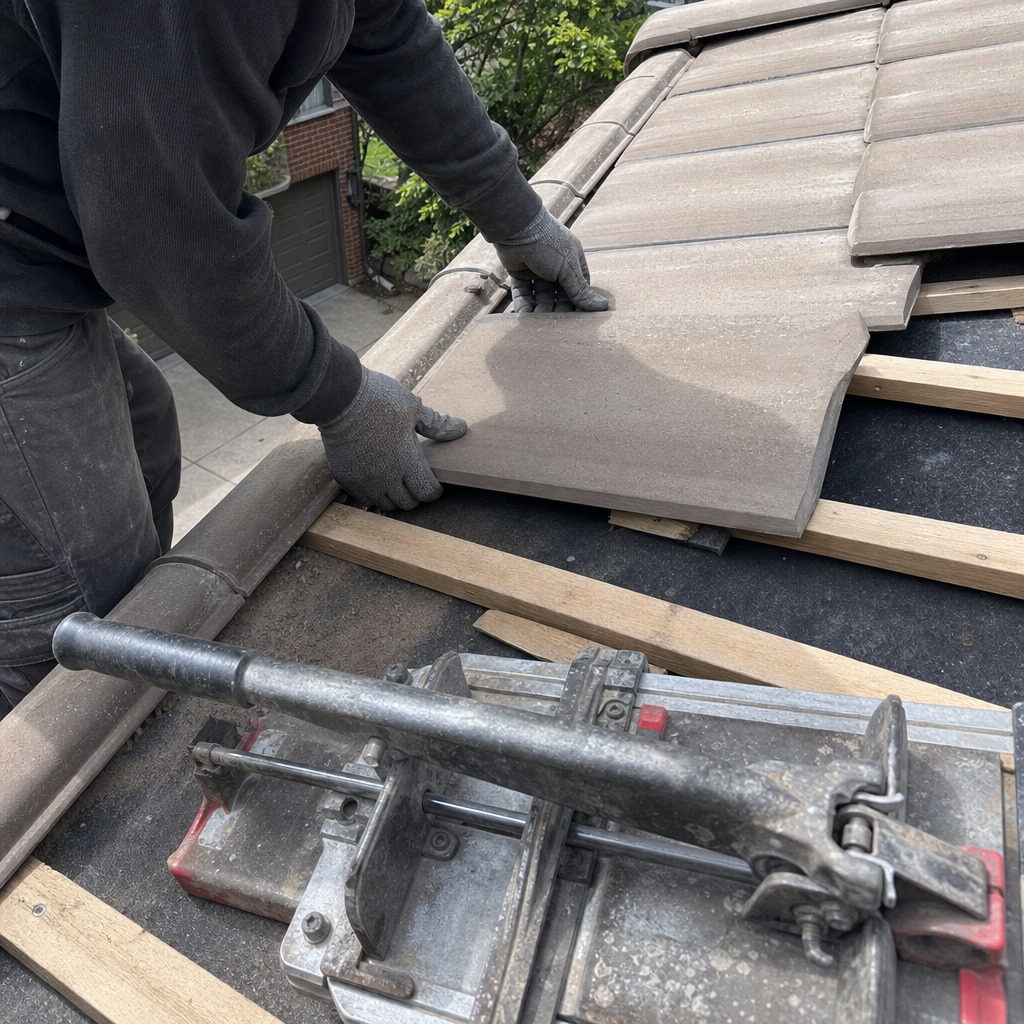
Chicago Heights sits roughly 28 miles southwest of Lake Michigan, which means it loses most lake-effect moderation while still enduring the same brutal freeze-thaw cycles that hit the broader Chicago metro. We see 20-plus annual cycles here, and they take a toll on roofs that have been layered in place rather than fully torn off. After a severe windstorm last spring, we responded to a two-flat on Emerald Ave whose west-facing slope had lost a 12-foot section of shingles. Stripping back the damaged three-tabs revealed two unseen layers, one of original 1920s strip shingles, and the underlying sheathing was delaminated from decades of moisture trapped between layers. We coordinated with the homeowner’s insurer to document the hidden damage and performed a complete tear-off and deck replacement using Owens Corning Duration shingles. Our Emergency & Storm Damage team handles these layered-roof situations routinely.
Emergency Tarp
When wind peels back shingles or a tree limb punches through, water doesn’t wait for business hours. Our trucks carry heavy-duty tarps, dimensional lumber, and mechanical fasteners sized for Chicago Heights’s older rooflines, those shallower pitches common on pre-1945 bungalows. We secure tarps to resist the prevailing southwest winds that drove the damage in the first place. For flat or low-slope commercial roofs along Chicago Road, we use weighted ballast systems that won’t puncture single-ply membranes. The goal is simple: stop the water tonight, then plan the permanent repair once the weather clears and insurance has been notified.
Insurance Claims
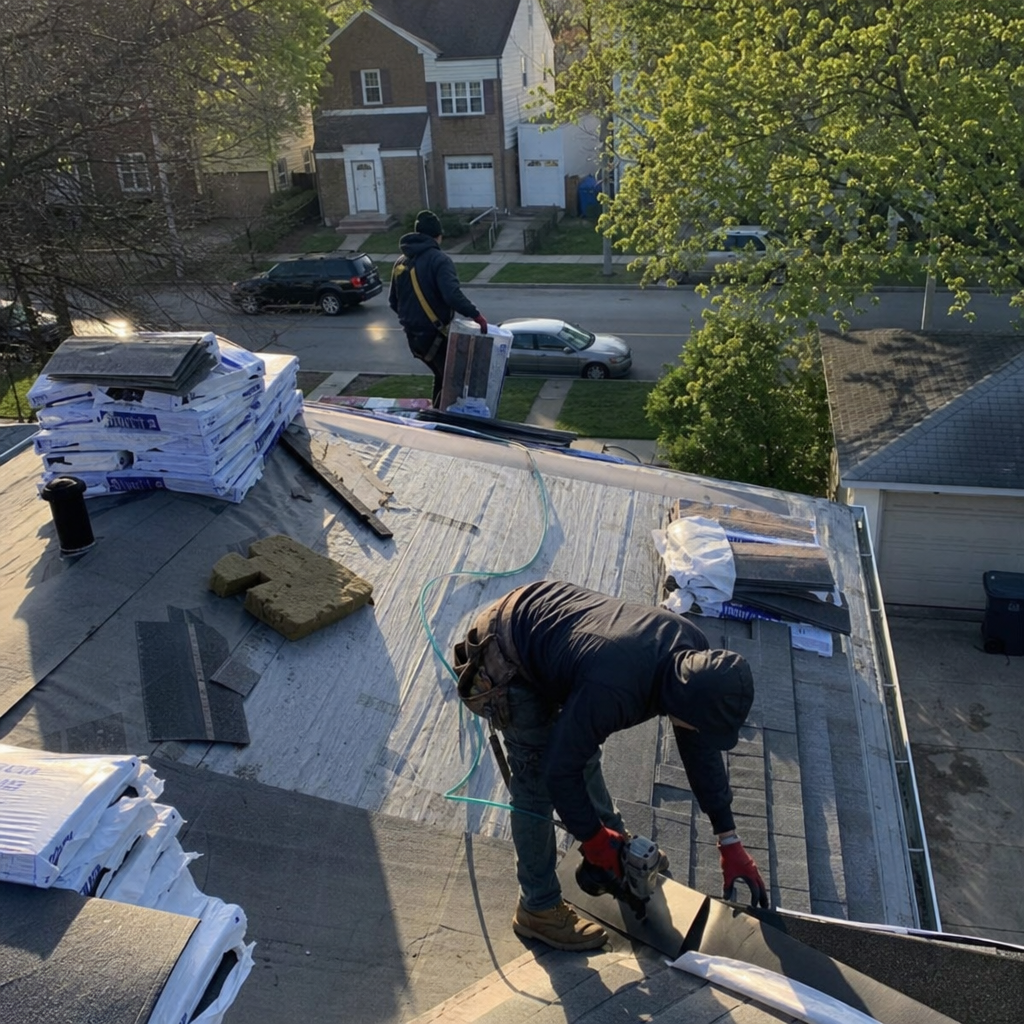
This is where our Chicago Heights experience pays off most directly. Many of the 1910s-1940s worker homes in ZIP codes 60411 and 60412 have been re-roofed in place over original decking, meaning storm damage often reveals multiple hidden layers, sometimes including 1920s strip shingles, that require full tear-off for insurance claims. Adjusters unfamiliar with Cook County’s historical layering practices may initially scope only for spot repairs. We document everything with photos taken from your actual roof, not the driveway, and we write supplemental estimates that explain why a full tear-off is necessary when hidden delamination is found. We’ve helped Chicago Heights homeowners secure full-replacement approvals that started as partial-damage denials. The 90-Day Done Right Promise backs every repair we perform, no paperwork, no arguing.
Wind Damage
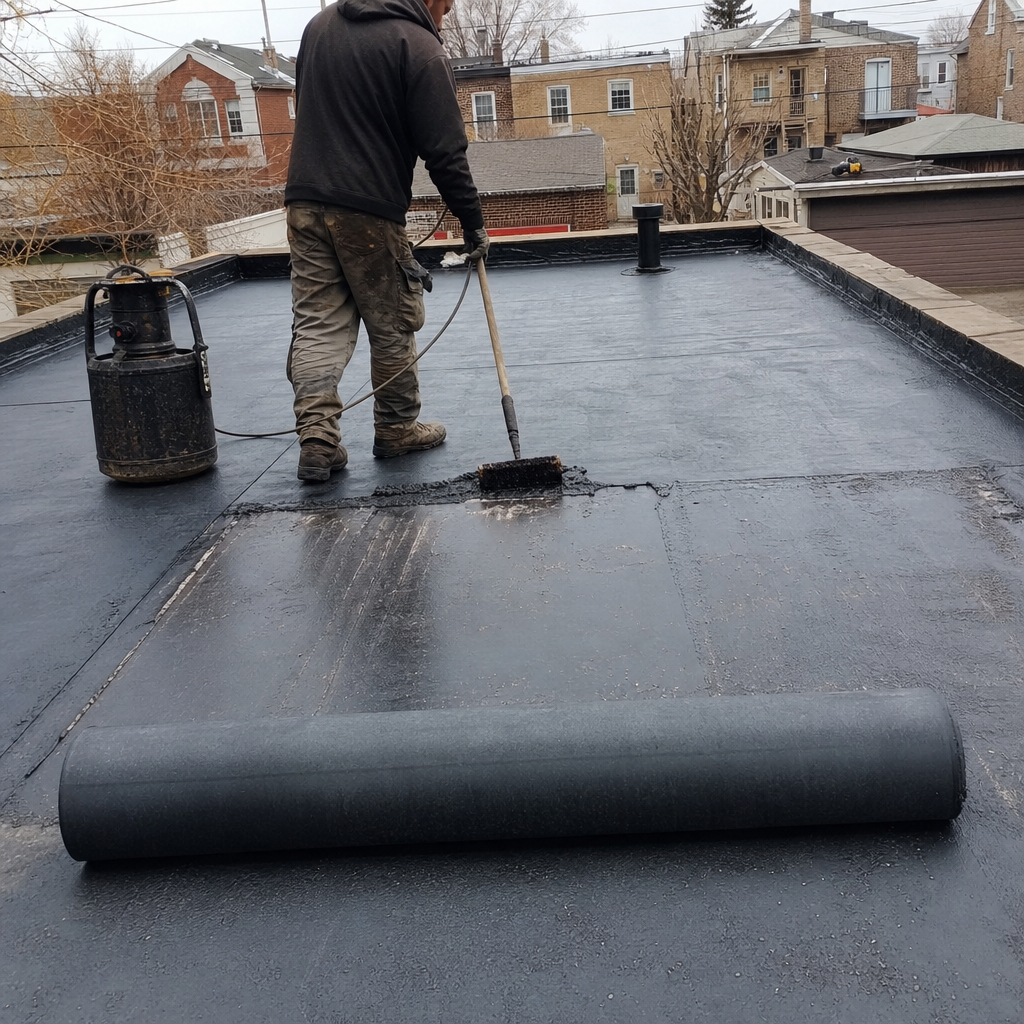
The flat inland terrain around Chicago Heights offers no natural windbreak against southwest prevailing winds. Homes with any compromise in nail pattern, especially on west and south exposures, suffer uplift failures that strip shingles in continuous sections. The problem worsens dramatically on roofs with multiple layers, where the top layer’s nails may not even reach sound sheathing. We inspect for this specifically, testing uplift resistance at the edges and documenting nail penetration depth where we can. If your roof has been layered, wind damage is often your signal that the entire assembly has reached end of life, not just the missing tabs.
What happens when you call
- 1
A real person answersNo phone trees - you reach a local pro.
- 2
You get an upfront price rangeHonest numbers before anyone is dispatched.
- 3
A background-checked tech heads outLicensed & insured, dispatched right away.
- 4
You approve before work beginsNothing starts until you say go.
Trusted Brands We Service in Chicago Heights
We are authorized installers for seven leading manufacturers, and we keep Chicago Heights customers in mind when we stock materials. For the steep-slope bungalows and two-flats that dominate the local housing stock, we regularly specify CertainTeed Landmark and Owens Corning Duration architectural shingles, both rated for the wind speeds we see across the open farmland south of town. For flat and low-slope commercial work on Halsted and Chicago Road, we draw from Atlas and IKO modified bitumen and TPO lines. We don’t substitute materials without your written approval, and we don’t claim to install brands we haven’t been factory-authorized to apply. Every product carries its full manufacturer warranty, plus our own 90-Day Done Right Promise on the workmanship.
Common Emergency & Storm Damage Problems We See in Chicago Heights Homes
- Wind-uplift failures on west and south exposures. The prevailing southwest winds across flat terrain drive sustained pressure against these faces. On layered roofs common in Chicago Heights, the top shingles may lift even when they look intact from the ground, because nails no longer bite solid decking.
- Ice-dam-driven soffit and fascia rot every spring. Those 20-plus annual freeze-thaw cycles produce predictable callbacks. Older homes with insufficient attic ventilation, especially the original worker housing with blocked soffit intakes, trap meltwater that refreezes at the eaves and rots the fascia behind the gutters.
- Hidden 1920s strip shingles beneath apparent single layers. On streets like Emerald and Loomis, we routinely strip what looks like one layer of three-tabs and find a second layer of original 1920s-era strip shingles beneath. Cook County allowed this historically, and it still gets flagged in re-sale inspections. Storm damage that exposes these layers almost always justifies full tear-off.
- Delaminated sheathing from decades of inter-layer moisture. When multiple shingle sandwiches trap humidity, the plywood or plank decking between them slowly turns punky. A windstorm tears off shingles; a footstep through soft sheathing reveals the real scope. We price this possibility into every Chicago Heights estimate, because finding it is not exceptional here, it’s expected.
Pricing for Emergency & Storm Damage in Chicago Heights, IL
We believe in no-hassle upfront pricing. The number on the estimate is the number on the invoice.
| Service | Typical Range in Chicago Heights |
|---|---|
| Emergency tarp (residential, standard pitch) | $275-$450 |
| Emergency tarp (flat/low-slope commercial) | $350-$600 |
| Storm damage repair, partial (spot shingle replacement, one layer) | $450-$950 |
| Storm damage repair with full tear-off and deck replacement (two-flat, typical) | $8,500-$14,000 |
| Wind damage inspection with photo documentation for insurance | $0 (free with repair authorization) |
| Insurance claim supplement preparation and negotiation | $0 (included with contracted work) |
Several factors push Chicago Heights pricing toward the higher or lower end of these ranges. Roof pitch matters: the shallow slopes on many bungalows are easier to access than steep two-story pitches, but they also trap moisture differently. Layer count is critical. A single-layer repair is straightforward; discovering two or three layers with punky sheathing beneath turns a half-day job into a multi-day tear-off with dump fees for additional material weight. Accessibility around older homes, narrow gangways between Chicago Heights’s tightly spaced two-flats, can complicate material staging. We assess all of this during our free, no-obligation inspection and give you one number that covers everything we’ve discussed. Call (855) 641-3418 for your exact quote.
We Also Serve Cities Near Chicago Heights
Our emergency response radius extends naturally from our Chicago base to cover the full south suburban corridor. We regularly answer storm damage calls in Chicago Heights and the surrounding communities of Sauk Village, Glenwood, Steger, and Park Forest. The same crews, the same trucks, the same 24/7 live answer. If you’re in these neighboring towns and watching water spread across your ceiling, we’re already en route to someone nearby.
Serving Chicago Heights, IL - Our Local Coverage Area
We’re based in the Chicago Heights area and know this community well. Use the map below to see our service coverage - if you’re nearby, we can almost certainly help.
FAQs - Emergency & Storm Damage in Chicago Heights
Yes, often, but the hidden layers must be properly documented. Insurance policies typically cover direct physical loss from the storm event, not pre-existing wear, but when wind damage exposes multiple layers including original 1920s strip shingles, the repair cannot be performed to code without full removal. We photograph the layer count, nail pattern failure, and any sheathing delamination from your actual roof, then write a supplemental estimate that explains why spot repair is impossible. We’ve helped Chicago Heights homeowners in ZIP codes 60411 and 60412 secure full tear-off approvals that began as partial-damage scopes. Call (855) 641-3418 and we’ll inspect at no charge.
Look for continuous shingle loss along west or south faces, lifted tabs that reveal different colored shingles beneath, or granule accumulation in gutters that seems excessive for the visible damage. These signs suggest the top layer has detached from compromised underlying layers. The only certain method is a rooftop inspection testing nail withdrawal resistance and probing sheathing. We perform this inspection free for Chicago Heights homeowners who suspect wind damage, and we document everything with photos for your records. Call (855) 641-3418 to schedule.
Yes, if done correctly. Flat roofs require weighted ballast tarps or membrane patches, not the nail-down methods used on pitched residential work. Nailing a tarp into a flat roof creates new penetration points that worsen the problem. Our trucks carry both ballasted and adhesive temporary systems sized for Chicago Heights’s older commercial and multi-family flat roofs. We can secure a two-flat roof on Loomis or similar streets within hours of your call, stopping water intrusion while you wait for adjuster availability. Call (855) 641-3418 for immediate dispatch.
Chicago Heights follows Cook County building codes, which require full tear-off when two or more shingle layers are present or when sheathing is more than 25% compromised. The village also enforces ice barrier requirements at eaves on any re-roof, which matters given the freeze-thaw exposure here. Our technicians know these codes and price accordingly, so your repair passes inspection the first time. We handle permit pulling as part of our standard process for Chicago Heights jobs. Call (855) 641-3418 and we’ll confirm exactly what your property requires.
Hail damage is generally covered as a named peril, but coverage depends on damage severity and your policy’s specific terms. In Chicago Heights, hail often damages the top layer of shingles while leaving older layers visually intact, which complicates adjuster assessment. We use chalk circle testing and photo magnification to document bruising, fractured matting, and accelerated granule loss that justifies replacement. If your roof already carries multiple layers, hail impact may have compromised the entire assembly’s water-shedding ability even where shingles remain in place. We present this evidence to your carrier and negotiate on your behalf. Call (855) 641-3418 for a free hail damage inspection and insurance documentation.
Call Ridgeline Roofing Co. of Chicago at (855) 641-3418 for 24/7 emergency response in Chicago Heights Heights Heights Heights. A live person answers every call. We offer free estimates, no-hassle upfront pricing, and the 90-Day Done Right Promise on every job. If you’re a senior or veteran, ask about our permanent 5% discount. If you’ve received another contractor’s estimate, we’ll provide a free second opinion. We show up when we say we will, we document what we find, and we stand behind our work with no paperwork and no arguing. That’s been our way since 2016.
Written by Pete Callahan, Owner at Ridgeline Roofing Co., serving Chicago Heights since 2016.