
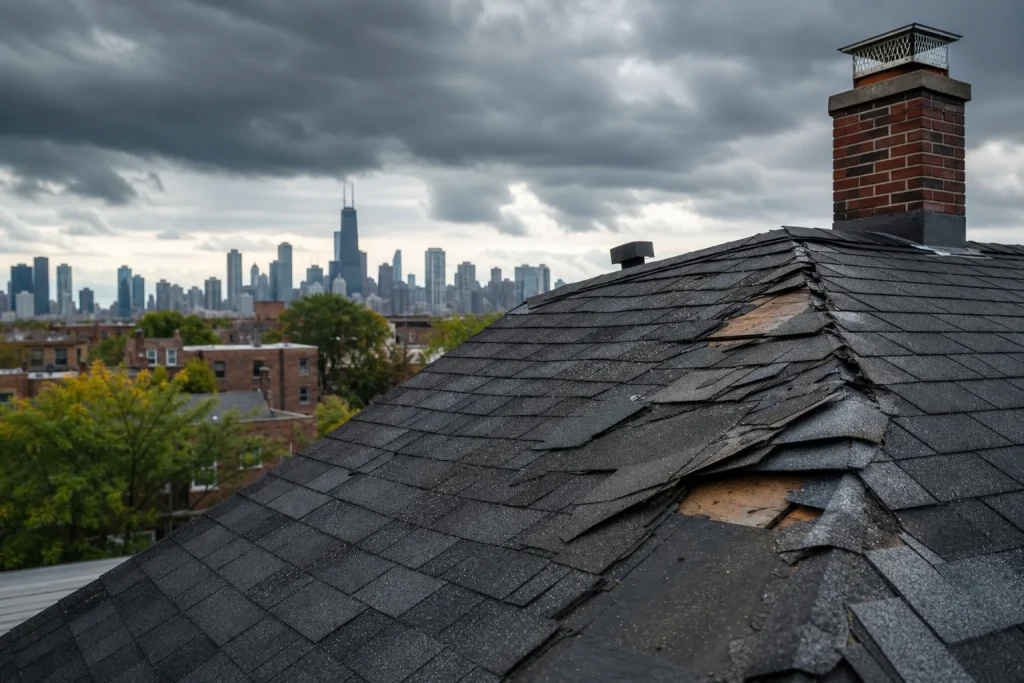
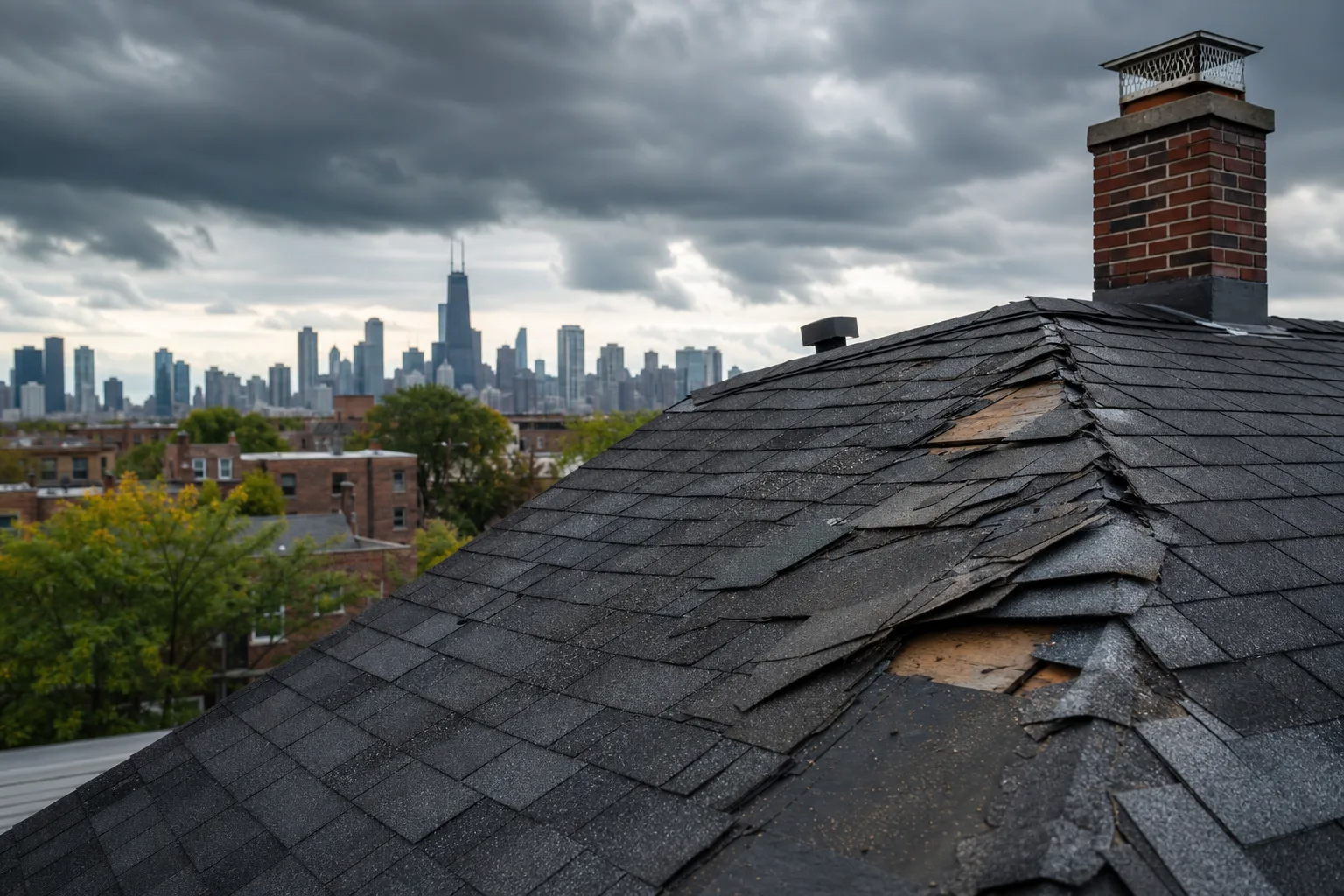
Emergency Roof Repair Near Me: What Chicago Homeowners Should Do First
If your roof is actively leaking during a Chicago storm, move furniture and electronics away from the drip line, place a bucket to catch water, and photograph the damage from multiple angles before any repairs begin. Then call a licensed local roofer who can respond same-day. If you’d rather not handle the temporary measures yourself, call Ridgeline Roofing Co. of Chicago at (855) 641-3418 - a live person answers, even at 2 a.m.
After every major Chicago storm, a predictable wave of out-of-state trucks floods the North Shore and the bungalow belt. The most dangerous moment for a homeowner isn’t the storm itself. It’s the panicked “emergency roof repair near me” search made while water is still dripping through the ceiling. In our 42 years on Chicago roofs, we’ve seen smart homeowners protect their homes and their wallets - and we’ve seen others sign away their insurance rights to a salesman with a clipboard and an out-of-state plate.
The thirty minutes after you discover an active leak are more consequential than most people realize. Not because the roof will collapse. Because the sequence of decisions you make determines whether your insurance claim holds, your interior damage is covered, and the contractor you hire is one you’ll ever see again.
What to Do Inside Your Home First
Chicago’s housing stock is old. In Edison Park, Portage Park, and across the bungalow belt, many ceilings are still plaster and lath, not drywall. Water moves differently in plaster. It travels along the lath channels, pooling in places far from the actual roof penetration. A small stain near your light fixture might mean a breach ten feet away.
Here’s the sequence we recommend:
- Move what matters. Furniture, electronics, family photos - get them out of the drip zone. Water in Chicago homes often carries decades of dust and plaster sediment. It stains permanently.
- Contain, don’t collect. A bucket is fine. A tarp on the floor is better for protecting carpet. Do not climb into the attic with a flashlight during an active storm - wet rafters and live electrical runs are a bad combination.
- Document before you touch anything. Take photos of the leak path, the ceiling damage, and any standing water. Take them from multiple angles with a timestamp. Your insurance adjuster will want this sequence.
- Puncture a sagging plaster ceiling. This sounds wrong, but a bulging plaster ceiling holds water like a bladder. A small, controlled puncture with a screwdriver - right in the center of the sag - releases the pressure and prevents a catastrophic collapse that takes the whole ceiling down. Put a bucket underneath first.
We were called to a home in Norwood Park last spring where the homeowner had watched a plaster ceiling bow for three hours, hoping it would hold. It didn’t. The repair went from a $400 roof patch to a $3,800 ceiling replacement. A small puncture would have saved it.
When You Can Temporarily Patch - and When You Shouldn’t
Some leaks can be safely controlled from inside. Others require a ladder, and that is where judgment matters.
Safe to handle yourself: A small, identifiable drip where you can place a bucket and redirect water with a tarp funnel. Attic access that lets you place a temporary patch on the underside of the decking with roofing tape and a piece of plywood. These are containment measures, not repairs.
Call a professional immediately: Any leak involving a steep pitch (over 6:12), ice accumulation on the roof surface, or visible structural sagging. Chicago’s freeze-thaw cycles in March and November create ice dams that hide active water channels. The roof surface looks solid. It isn’t. We’ve seen homeowners in Rogers Park and Beverly slip on what appeared to be dry shingles.
Never attempt: Tarping from the roof surface during precipitation, working near power service lines, or climbing a ladder alone without someone to foot it. Chicago’s alleys and narrow lots often place service lines closer to the roof edge than in suburban construction.
If you’re unsure about the pitch or the ice condition, stay off. A temporary interior containment is always safer than a fall.
Documenting for Insurance: The Photo Sequence That Matters
Insurance companies deny claims for one predictable reason: the homeowner repaired the damage before documenting it. Once a tarp goes up or a patch is applied, the evidence of the original breach is gone.
Take photos in this order, before any contractor touches the roof:
- Wide exterior shots of the roof line showing storm context - downed branches, neighboring damage, hail accumulation in gutters.
- Close-ups of the suspected penetration point from the ground, from a second-story window if safe, and from the roof surface only if you have already determined it is safe to access.
- Interior damage - ceiling stains, wall seepage, damaged flooring, affected contents. Include a common object for scale (ruler, coin, your hand).
- Serial photos of standing water being contained - this proves the leak was active and required emergency response.
- Photos of any temporary measures you took, with timestamps.
Store these in cloud backup immediately. We’ve had homeowners in Lincoln Square lose their documentation when a phone went into a sink full of dishwater the same evening.
Your policy likely covers emergency repairs to prevent further damage, but it requires that you mitigate responsibly. Document first. Mitigate second. The sequence matters.
Three Contract Terms That Separate Roofers from Storm Chasers
The trucks that appear after a Chicago hailstorm often carry persuasive salespeople. They offer immediate service, insurance “handling,” and a quick signature. Here’s what to watch for.
Assignment of benefits. Never sign a document that assigns your insurance benefits to the contractor. This gives them your claim money directly, removes your negotiating power, and is illegal or restricted in many states. In Illinois, it is a red flag for a reason. You keep your policy. You pay the contractor from the proceeds. That’s the order.
Contingency contracts with cancellation fees. A legitimate emergency roofer in Chicago will inspect, estimate, and let you decide. A storm chaser locks you in with a fee for changing your mind. Read the cancellation clause. If it costs more than a nominal amount to walk away, walk away now.
No local license verification. Chicago requires roofing contractors to carry a city license. Ask for the license number. Verify it through the City of Chicago’s Business Affairs and Consumer Protection portal. Then verify general liability and workers compensation coverage through the Illinois Department of Insurance. Ten minutes online. If a contractor deflects or delays, that is your answer.
Ridgeline Roofing Co. has served Chicago since 1984. We carry the license. We carry the insurance. We’ll show you both before we climb the ladder. That’s how we’ve stayed in business for 42 years while storm chasers come and go with the weather.
Verifying a Chicago Roofer’s License and Insurance in Ten Minutes
Here is the exact process. No shortcuts.
- City of Chicago license: Visit the Chicago Business Affairs and Consumer Protection license lookup. Search the company name or the individual’s name. A valid roofing contractor license will show “Roofing Contractor” as the license type, with current status. Expired or pending status means they cannot legally pull permits in Chicago.
- Illinois roofing registration: The Illinois Department of Financial and Professional Regulation maintains a separate database. Search for the company. Registration is required for any roofing work over $500 in Illinois.
- Insurance verification: Request a certificate of insurance directly from the contractor’s insurance agency, not from the contractor. The certificate should name you as the certificate holder for the duration of your project. Confirm general liability (minimum $1 million is standard) and workers compensation. Uninsured roofers are common in the post-storm rush. If a worker is injured on your property and the contractor lacks coverage, your homeowner’s policy may be the only source - and it may not be enough.
We welcome this verification. We’ve never lost a job because a homeowner checked our credentials. We’ve gained many because they checked someone else’s and found them wanting.
When to Call Ridgeline Roofing Co. of Chicago
Call when water is entering your living space and you need same-day response. Call when you’ve documented the damage and need a professional inspection to support your insurance claim. Call when a storm chaser has left you uncertain and you want a second opinion - ours is free, with no obligation.
Our phones are staffed by a live person, 24 hours a day, seven days a week. Not a callback window. Not a voicemail tree. A person who can dispatch a background-checked, uniformed technician with a photo-documented inspection process. Most emergency repairs are completed in a single visit, with no-hassle upfront pricing. The number on the estimate is the number on the invoice.
We install GAF, CertainTeed, Owens Corning, and other leading manufacturer lines with proper specifications - no substitutions, no leftover shingles from another job. And every repair we make is backed by our written 90-Day Done Right Promise. If it is not right, we come back and make it right. No paperwork, no arguing, no runaround.
Related services in Chicago: Roof Repair in Chicago | Roof Replacement & Installation in Chicago | Specialty Roofing in Chicago
The Bottom Line
The thirty minutes after a leak starts are about sequence, not speed. Document first. Contain second. Verify your contractor third. Sign nothing that assigns your insurance benefits. Check the license. Check the insurance. Then let a qualified roofer do the work.
Chicago’s older homes reward patience and punish haste. A plaster ceiling saved with a screwdriver puncture beats one replaced at triple the cost. An insurance claim with timestamped photos beats one denied for lack of evidence. A local roofer with 42 years in the community beats a truck that left for Texas this morning.
If you’re in Chicago and need help now, Ridgeline Roofing Co. of Chicago offers free estimates - call (855) 641-3418. A live person will answer.
Frequently Asked Questions
Most emergency repairs in Chicago range from $350 to $1,200, depending on the leak location, roofing material, and whether interior damage requires temporary protection. Steep pitches, slate or tile roofs, and multi-story homes fall at the higher end. We provide no-hassle upfront pricing before any work begins. Call (855) 641-3418 for an exact quote - estimates are free.
In most cases, yes. We carry common materials for asphalt shingle, flat membrane, and metal flashing repairs on our trucks, and most emergency calls in Chicago are completed in a single visit. During major regional storms, response times may extend to 24 hours. A live person answers every call, 24/7, and will give you an honest arrival window. Call (855) 641-3418 to check current availability.
Call a roofer first if water is actively entering your home. Document everything, then contact your insurance company within 24 hours. Your policy requires prompt reporting, but a professional inspection helps you describe the damage accurately and avoids the common mistake of accepting an adjuster’s initial scope before understanding the full repair need. We provide photo-documented reports that align with insurance requirements. Call (855) 641-3418 and we’ll guide you through the sequence.
Verify their City of Chicago roofing license through the Business Affairs and Consumer Protection portal, confirm Illinois state registration, and request a certificate of insurance sent directly from their agent. Legitimate Chicago roofers have local addresses, local references from before the current storm, and no requirement that you sign over insurance benefits. Ridgeline Roofing Co. has served Chicago since 1984 - we welcome verification. Call (855) 641-3418 or check our credentials yourself.
Written by the team at Ridgeline Roofing Co. of Chicago, serving Chicago since 2017.
Need Roofing Help?
Call Ridgeline Roofing Co. of Chicago - licensed & insured, here with fast after-hours help in Chicago.
(855) 641-3418